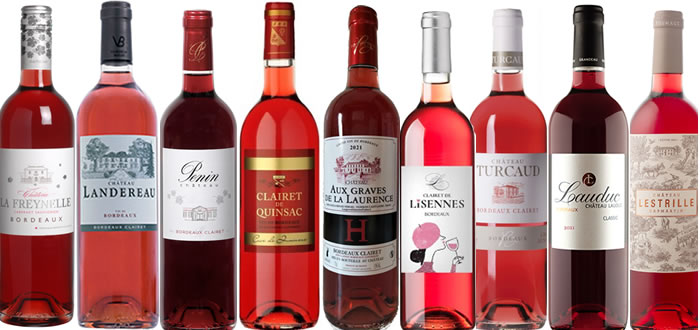
“Clairet”, or “Bordeaux Clairet”, is a type of wine mainly produced in the Bordeaux wine region. It lies somewhere between a rosé and a red wine, both in terms of its aromatic profile and its structure. The origin of the term Clairet comes from the Old French word “claret,” meaning “clear” or “light.”
Historically, we need to go back 1,500 years ago, as the first traces of a similar product to the Clairet we drink today date back to the Middle Ages, when it was known as “French claret” or “vinum clarum”.
It was a wine made from all the grape varieties available at the time, which were blended together in a single vat before being exported to England. This explains the English origin of the name.
How was “Clairet” born?
This wine was highly prized by the English, who discovered it following the marriage of Eleanor of Aquitaine and Henry Plantagenêts (later Henry II) in 1152. The commercial exchanges developed by this famous couple allowed the English to import Bordeaux wines. Historically, England can be considered Bordeaux’s first major international wine market.
Such was the popularity of this wine that, in most of the major estates of medieval Bordeaux, around 87% of production was dedicated to clairet, compared with just 13% for red wine — a proportion that has changed dramatically over the centuries.
Exports of “Clairet” intensified during the 13th century, reaching a total of 102,724 barrels exported in 1303. Trade between Bordeaux and England did not come to an end until the conclusion of the Hundred Years’ War in 1453.
Despite the end of trade with England, clairet production continued. In the 18th century, the “New French Claret” emerged, promoted by Arnaud de Pontac of Château Haut-Brion.
But where does Clairet stand today?
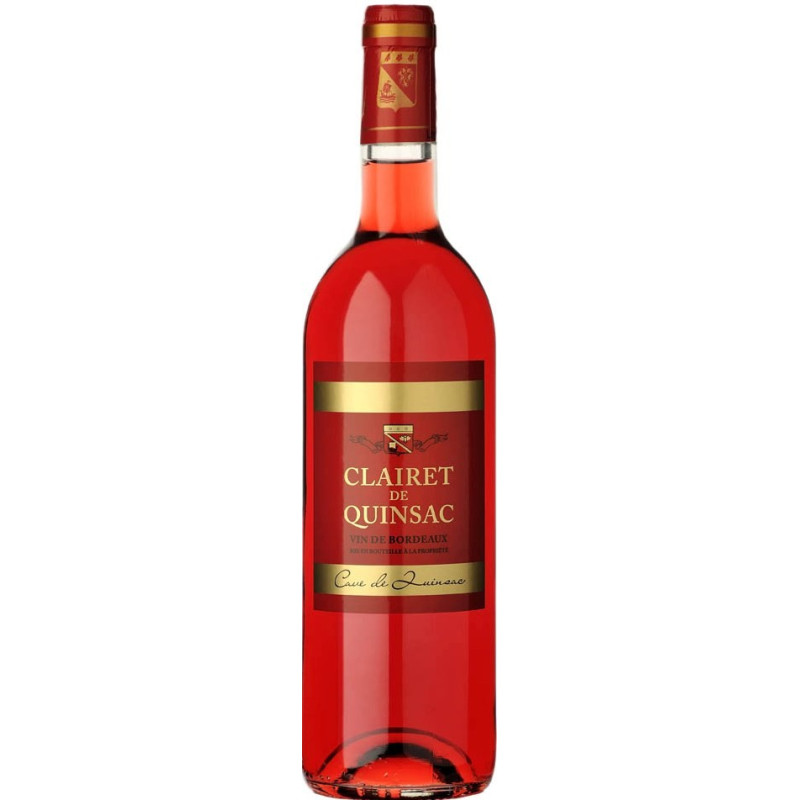
It was not until 1958 that the name “Clairet” was brought back to life, thanks to the Quinsac cooperative winery, which had itself been founded in 1949 on the right bank of the Garonne.
The cooperative helped this type of wine obtain its own appellation, officially recognized and regulated according to the standards of the French National Institute of Origin and Quality (INAO). This marked the creation of the Bordeaux Clairet appellation.
Two names played a key role in the revival of clairet: Émile Peynaud and Roger Amiel.
Émile Peynaud (1912–2004) was an internationally renowned French oenologist, often referred to as the “father of French oenology.” He entered the wine industry at the age of 15, working as a wine merchant for Maison Calvet. He was particularly influential in reforming winemaking techniques and developing the concept of terroir.
Another important area of research was malolactic fermentation. At the time, this process was considered a wine disease. Peynaud eventually came to understand the importance of malolactic fermentation and how to control it.
Interestingly, Émile Peynaud received the Literary Prize from the Académie du Vin de Bordeaux in 1988, for its book “The taste of wine”.
Roger Amiel (1913–2001) was a French winemaker and politician who also served as mayor of Quinsac, near Bordeaux. He supported Émile Peynaud in reviving clairet by establishing the Quinsac Cooperative Winery.
So, what about Bordeaux “Claret”?
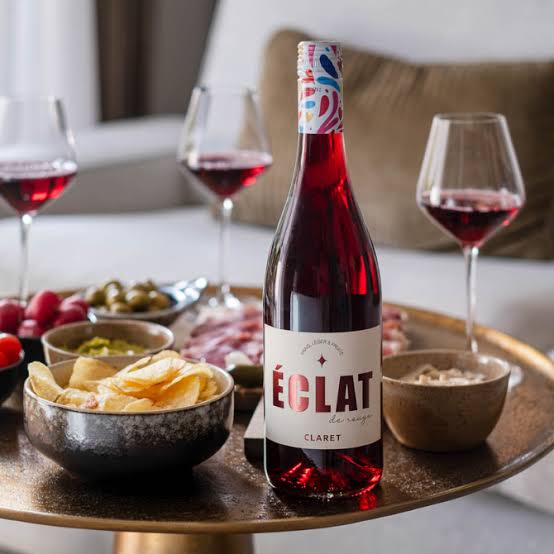
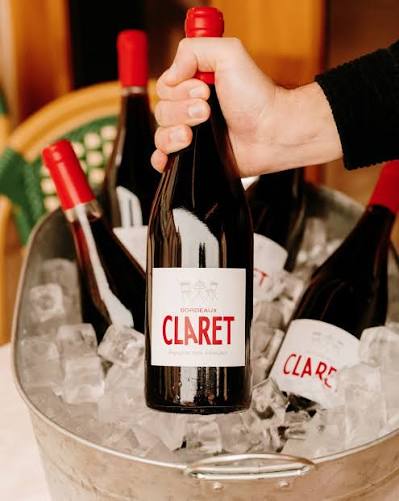
We have to talk about the brand new appellation “Bordeaux Claret”, which is defined as a light red wine, low in tannins, with a relatively pale ruby-to-purple color. It can be distinguished from clairet, which is a rosé wine with very deep color. These wines are intended to be enjoyed young and served rather cool.
Wine consumption has declined significantly around the world, which has encouraged the development of lighter wines that can appeal to consumers on occasions outside traditional mealtimes, while still maintaining a connection to Bordeaux’s wine heritage.
Climate change is another factor to take into consideration. In many cases, rising temperatures are encouraging consumers to turn towards fresher wines, whereas Bordeaux reds can sometimes be too tannic to be served properly chilled.
The very first bottles of this new “Claret” appelation have been released as from December 15th 2025.
And what should I eat with this wine?
Bordeaux Clairet is a true chameleon at the table. So here are my five perfect pairings to make the most of your bottle of Clairet!
- The ultimate aperitif pairing: a platter of fine charcuterie. Clairet has just enough structure and freshness to cut through the richness of cold cuts without being overwhelmed by its saltiness. The wine’s fruity character and lively acidity bring out the flavors of Bayonne ham, dry-cured sausage, or pâté en croûte.
- The barbecue king: marinated chicken skewers or merguez sausages. If classic rosé can sometimes struggle to stand up to the bold character of grilled food, Clairet rises to the challenge with ease. Its gentle tannins perfectly complement the charred flavors of the meat, while its fruitiness balances the heat of merguez sausages or the spices in a marinade.
- A Southern France classic: Provençal stuffed vegetables. Stuffed tomatoes, zucchini, and eggplant filled with pork and beef pair wonderfully with this wine. Clairet’s natural acidity responds beautifully to the acidity of cooked tomatoes, while its roundness on the palate embraces the comforting character of the filling.
- The adventurous pairing: lamb tagine with prunes and apricots. Clairet loves sweet-and-savory flavors and gentle spices. The wine’s ripe red-fruit notes echo the dried fruits in the tagine, while its freshness prevents the dish from feeling too heavy or overly sweet.
- The vegetarian option: a thin tomato and pesto tart. A simple, summery recipe that highlights the freshness of Merlot, the main grape variety used in Clairet. The pesto brings plenty of aromatic intensity. Clairet, with its fruity and refreshing character, balances the dish without overpowering the flavor of the basil.
To conclude!
And there you have it! You are now ready to enjoy your Clairet or Claret while knowing exactly what to say about it!
Don’t hesitate to explore your local wine merchants in search of the perfect bottle, whether it is labeled Bordeaux Clairet or Claret.
As for me, I can already picture myself on the Basque coast, sipping a glass alongside a platter of charcuterie by the ocean.
In other words — JUST A DREAM!
Want to know moreabout wine? Come and attend to one of our tasting workshops at Olala Bordeaux!