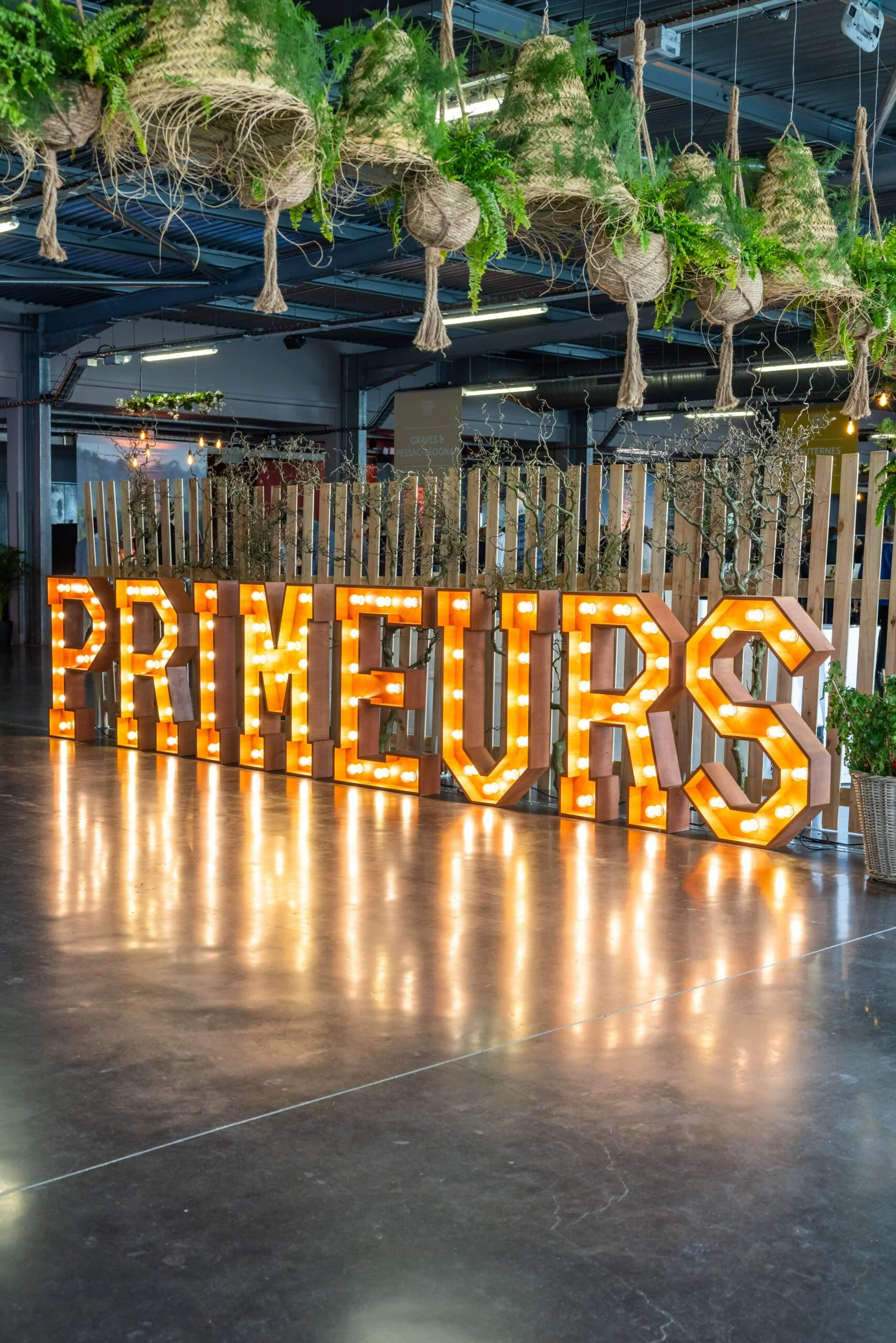
En primeur? What’s this?
En primeur? What’s this? It’s a market system where wineries open their doors to specialized wine journalists and professionals from France and around the world (wine merchants, sommeliers, négociants, importers) to preview the upcoming 2025 vintage. In other words, these are wines still in development, whose ageing only began in January 2026.
Why do this? To allow châteaux to secure early cash flow to continue their operations. It acts as a financial safety buffer against climate and market volatility.
It’s an entire ecosystem involving châteaux, brokers, négociants, and buyers.
First, the châteaux set a price, a release schedule, and decide how much wine will be sold en primeur.
Brokers (courtiers) are the historical intermediaries between châteaux and négociants — the main actors of the Bordeaux marketplace*. They evaluate wines, facilitate transactions, and certify agreements (brokerage notes). However, they never own wine.
Négociants buy the wines en primeur from the châteaux (via brokers) and handle global distribution, storage, invoicing, and export logistics. They therefore assume a significant share of commercial risk.
Professional buyers include international importers, wholesalers, wine merchants, restaurateurs, and specialized platforms.
The Bordeaux en primeur system originated from the commercial vocation of the Port of Bordeaux as early as the 17th century, when merchants purchased wines before full maturation to secure supply. This is what is known as “La Place de Bordeaux” — an almost virtual marketplace where buyers and sellers negotiate prices before global distribution.
As you can see, en primeur is a key step in the wine calendar.
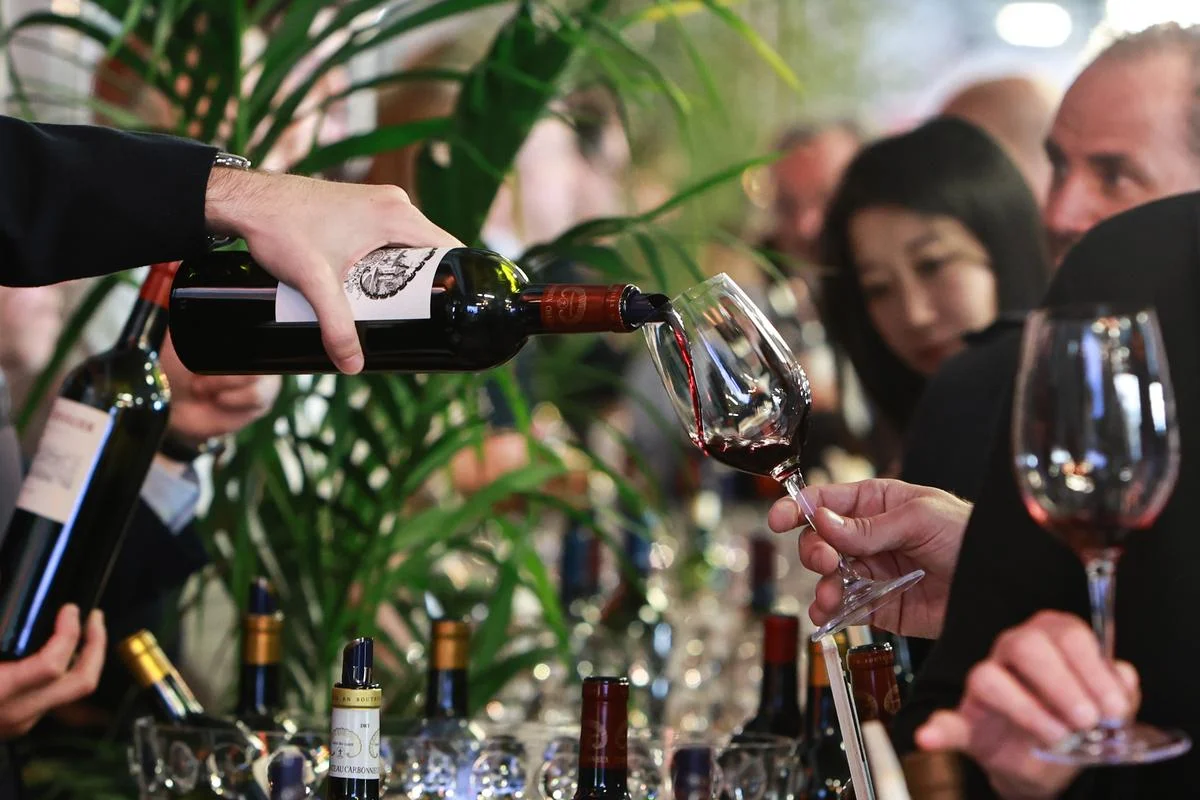
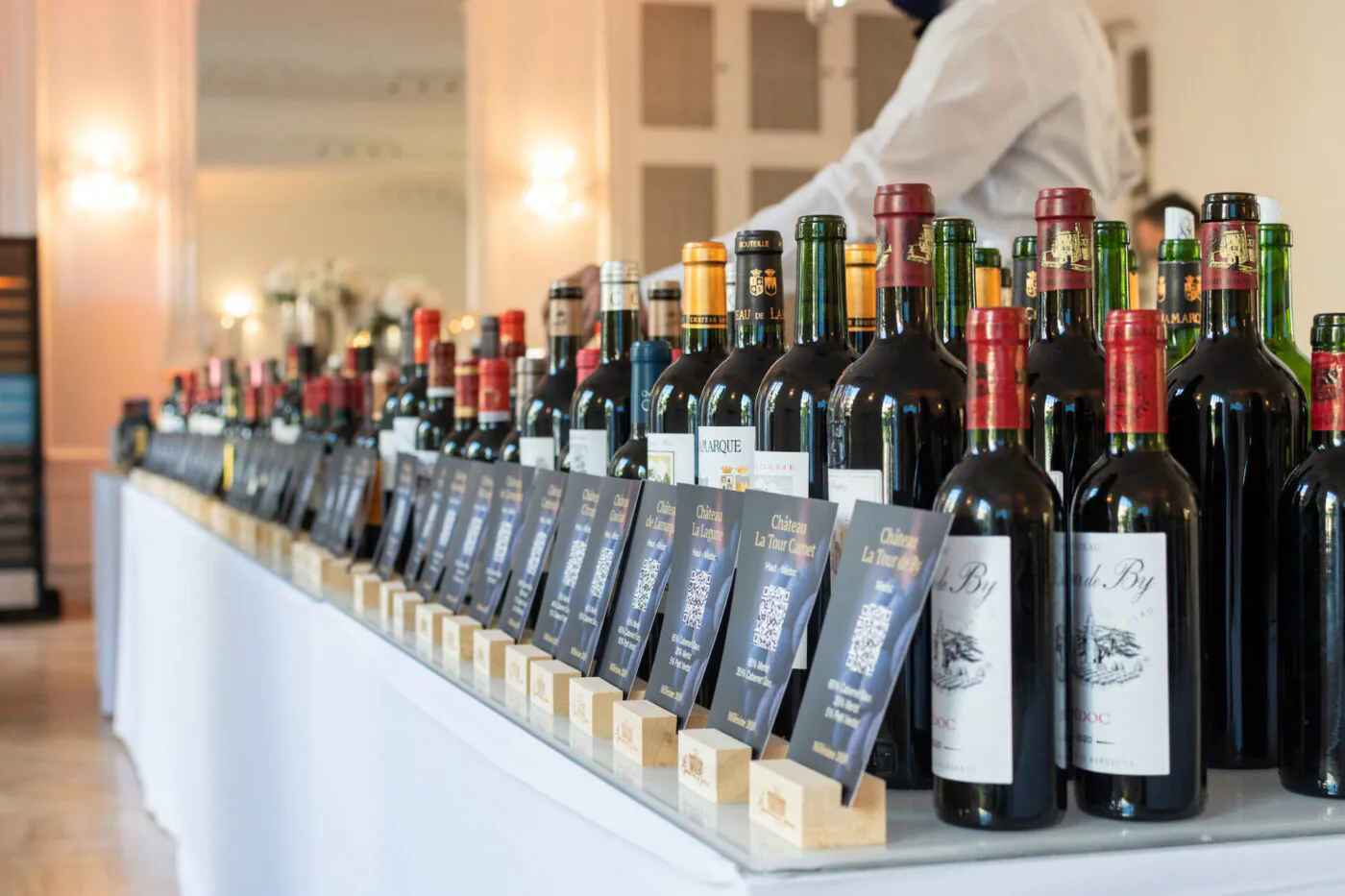
The 2026 en primeur tastings will take place from April 20 to 23, but early “pre-primeurs” tastings are already happening. The Olala team was invited to the “Avant Primeurs” tasting of Vignobles K (Right Bank), Château Sociando-Mallet (Haut-Médoc), and Château Brown (Pessac-Léognan) on Wednesday April 8 at 19 Allées de Chartres in Bordeaux.
To what about the 2025 vintage?
First, good news: it’s a “5” year. And in Bordeaux, the most successful vintages often include the numbers 0, 5, or 9.
And indeed, 2025 experienced near-perfect weather conditions.
A mild winter — although in February there was a short cold snap (-5°C, felt like -8000°C for locals!). This cold spell triggered budbreak in the first ten days of April, not too early.
The vines started their cycle under rainy conditions, but spring was overall mild and steady, allowing gradual growth.
Flowering was early but under sunshine. Pollen was everywhere for weeks — no rain to settle it. Our blue vans turned yellow-green (yes, yellow + blue = green, a little art lesson included).
Fruit set also took place under ideal conditions.
Summer set in with frequent storm episodes — “it’s raining in my apartment” — but overall rainfall became scarce. Veraison occurred at the end of July, quick and uniform.
In mid-August, a heatwave stressed the vines. The lack of water halted growth and even led the berries to draw water from themselves to survive. Without rainfall, we would have ended up with only skins, seeds, and sugar.
Thankfully, rain finally came, preventing over-ripening. We had even hoped for slightly plumper berries and higher yields. Instead, alcohol levels are slightly lower than expected: around 13–13.5% instead of 14–14.5%. And yields are also down.
White wine harvest took place in mid-August — early, but justified. The grapes showed high acidity (excellent for balance) and strong aromatic potential.
Red wine harvest was also relatively early, with perfectly ripe and healthy grapes.
In a context of climate change, 2025 has done remarkably well: no over-ripeness, no low acidity, no excessive alcohol. Just lower volumes.
It is a warm and early vintage: reds are dense and structured, whites are surprisingly fresh and generous.
So what did I taste?
You get it — 2025 is already very promising in Bordeaux.
But tasting en primeur wines is not about drinking finished wines. If only experts do these tastings, there’s a reason: you must perceive potential through still-rustic elements.
With my humble nose and palate, what can I really take away from this tasting — apart from black-stained teeth from so much sampling?
Vignobles K
Vignobles K, founded by Peter Kwok, includes seven estates located on Bordeaux’s Right Bank. As expected, the blends are predominantly Merlot-based.
I tasted three of them:
Château Le Rey (Côtes de Castillon): easy-drinking, already quite supple.
Château Tour Saint Christophe: opulent yet structured. The nose shows ripe black fruits such as black cherry and plum. Promising ageing potential.
Château Bellefont-Belcier: my favourite. I had already tasted the 2021 vintage — a fresh year I initially approached with hesitation but found divine. The 2025 immediately charmed me with a delicate nose of flowers and fresh black fruit. On the palate, the oak is already well integrated, with a velvety texture and a refreshing limestone backbone.
Château Sociando-Mallet (Haut-Médoc)
Château Sociando-Mallet shows a “new era” blend profile that, as in 2024, leans towards Merlot. Sociando-Mallet adapts to each vintage: when conditions favour Merlot, it naturally takes the lead. The estate aims for earlier drinkability.
The 2025 vintage is aromatic and charming on the nose, and rich and fleshy on the palate. It will be enjoyable, as will its second wine, La Demoiselle de Sociando-Mallet, which is a real “candy.”
Château Brown (Pessac-Léognan)
I end my en primeur tasting in my favourite Bordeaux appellation: Pessac-Léognan.
Over time, through my experience at OLALA Bordeaux, I’ve sadly realised this AOC is globally under-recognized, despite having the privilege of producing top-quality wines in both red and white.
Château Brown proudly represents the appellation.
The red is elegant, with deep black fruit and a minty, peppery freshness. The attack is soft and silky, the tannins fine, leading to a slightly bitter yet pleasant finish.
The white — because they are so expressive it doesn’t matter that it comes after the red, and I wanted to end on freshness — is currently all about citrus, with clementine as the dominant note. It shows great energy and a vibrant finish. Very promising.
I also tasted the 2023 release, delicate and refined, with white floral aromas and a long, gourmand finish with honeyed notes.
Final thoughts
You’ve probably understood it by now: 2025 is shaping up to be a very fine Bordeaux vintage.
But more than that, it reflects a new reality: Bordeaux no longer follows a fixed recipe — it adapts, adjusts, and composes.
Between charming wines almost ready to seduce and more classic, structured styles, 2025 cannot be reduced to a single definition. And that is precisely what makes it interesting.
It is a vintage that forces you to taste, compare, and form your own opinion — in other words, to stay curious.
For my part, this tasting makes me want to closely follow the detailed critic reviews (Parker, Galloni, Martin).
Not everything is fully in place yet in these still-forming wines. But that is precisely the magic of en primeur: glimpsing what the wine will become, imagining its evolution… and accepting to wait a little longer.
See you in a few years to check whether our intuitions were right — and, most importantly, to finally drink them.